
Best Early Unlocks in Hotel Architect
 1
2
3
1
2
3
Upgrade read
How to tell whether an early unlock is actually helping
- Hiring upgrades smooth the whole run. Better candidate quality and better staff support pay off everywhere, not just in one room.
- Operational upgrades scale with your layout. Stamina, financial breathing room, and movement efficiency become stronger as the hotel gets busier.
- Luxury upgrades should arrive after the base hotel is healthy. Fancy furniture and extra service layers are strongest when the hotel is already stable enough to use them properly.
Strategy takeaway: the best early research pick is usually the one that makes the current hotel less fragile.
The best early unlocks in Hotel Architect are the ones that make the base hotel easier to run. If an upgrade does not improve flow, staffing quality, or practical revenue, it is probably not an early priority.
Best early unlocks
Section titled “Best early unlocks”Employer Branding
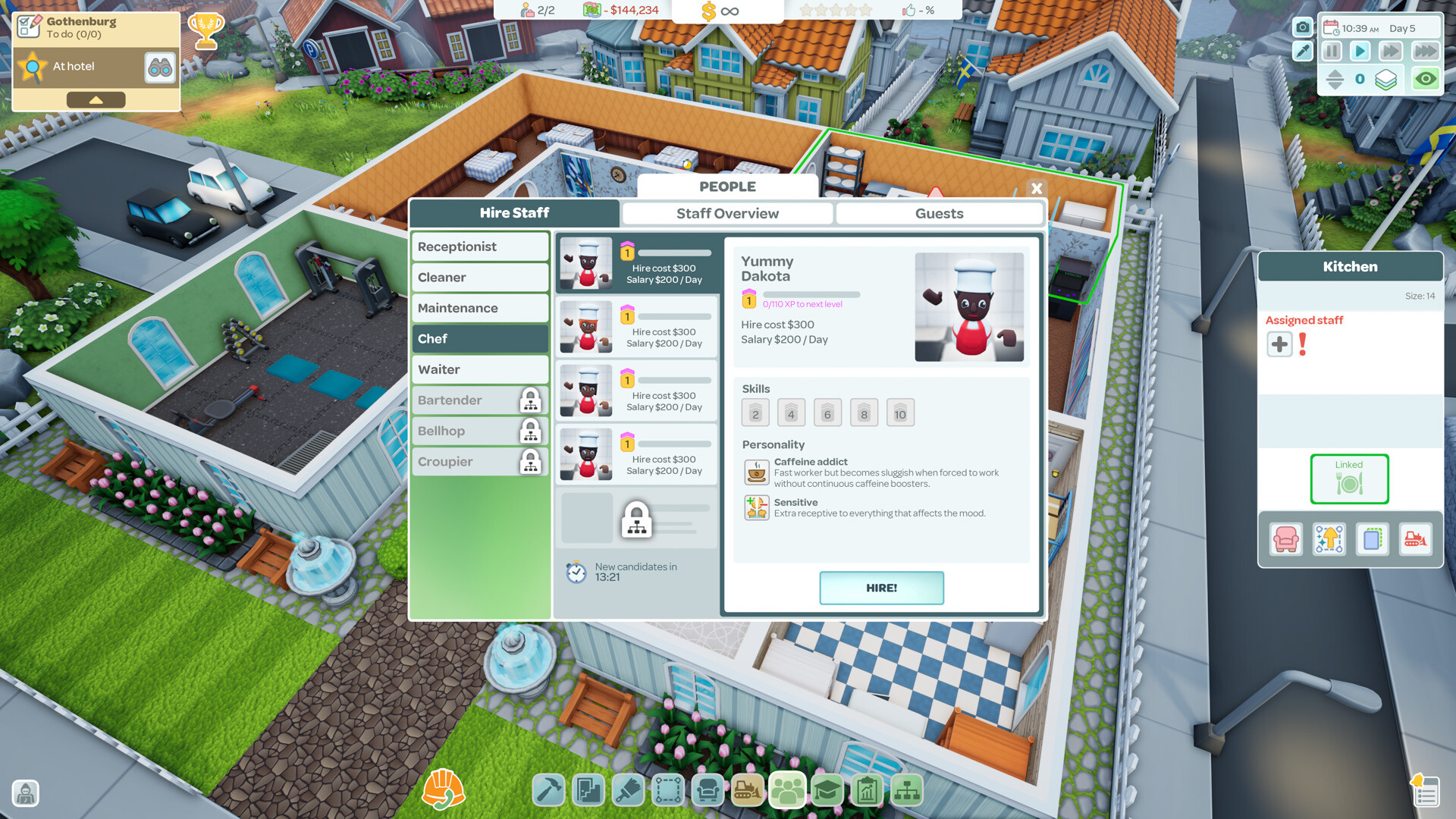
Section titled “Employer Branding”This is an easy early pick because more candidate choice makes hiring less painful. Better options at the hiring stage save you trouble for the rest of the run.
Energizer
Section titled “Energizer”Staff losing energy more slowly is one of those upgrades that feels small until your hotel gets busy. It smooths out a lot of quiet inefficiency.
Candidate Screening
Section titled “Candidate Screening”Better starting staff levels are worth more than they look, especially in runs where service quality starts to matter quickly.
Bigger Menus
Section titled “Bigger Menus”If you are moving into restaurant or bar service, menu flexibility helps you support a wider range of guest demand instead of running a thin one-item offer.
Loan Magnet or other financial breathing-room picks
Section titled “Loan Magnet or other financial breathing-room picks”Financial upgrades are not exciting, but they are useful if your run needs safer expansion windows or recovery tools.
Vertical Velocity
Section titled “Vertical Velocity”Elevators become more relevant as the hotel gets taller and staff travel starts eating time. This is not always a first upgrade, but it becomes a strong practical one once vertical movement starts hurting efficiency.
Good upgrades, but not always first
Section titled “Good upgrades, but not always first”Luxury Furniture
Section titled “Luxury Furniture”Great once you are actively pushing room tier upward. Less useful if the hotel is still struggling to run basic rooms well.
Bellhop Service
Section titled “Bellhop Service”Useful later, but it adds another system to support. Do not rush it while the core hotel is still unstable.
Air Conditioners
Section titled “Air Conditioners”A high-value pick in hot locations such as Santorini, but not a universal first choice on every map.
Bad early-upgrade habit
Section titled “Bad early-upgrade habit”Players often pick upgrades for fantasy future value instead of current hotel pressure. The safer question is not “What will be powerful later?” It is “What makes this hotel easier to run right now?”
Recommended early order
Section titled “Recommended early order”If the run is normal, a safe early sequence is:
- Better hiring quality
- Better staff stamina or operational support
- Financial breathing room if needed
- Service-specific upgrades once the service exists
That order keeps your unlock path tied to the hotel you actually have instead of the one you hope to build in twenty minutes.
Quick answers
Section titled “Quick answers”What makes an upgrade worth taking early in Hotel Architect?
Section titled “What makes an upgrade worth taking early in Hotel Architect?”The best early upgrade is usually the one that makes the current hotel less fragile. If it improves staff quality, stamina, movement, or cashflow, it usually earns its place faster than a flashy luxury pick.
When should I start taking luxury or specialist unlocks?
Section titled “When should I start taking luxury or specialist unlocks?”Take them after the base hotel is profitable, staff coverage is steady, and you are genuinely ready to support the extra room tier or service chain they unlock.
Read next
Section titled “Read next”If you want the safest opening before you commit to research choices, start with Hotel Architect Beginner Guide: What to Build First.
If the run is already bleeding money, go straight to How to Stop Losing Money.